
Resources · 4 min read
Composite vs. Wood Fence: Which Fits Your Conroe Lot?
Wood costs far less up front. Composite skips the staining and the rot. Your lot, your HOA, and how long you plan to stay decide which one wins.
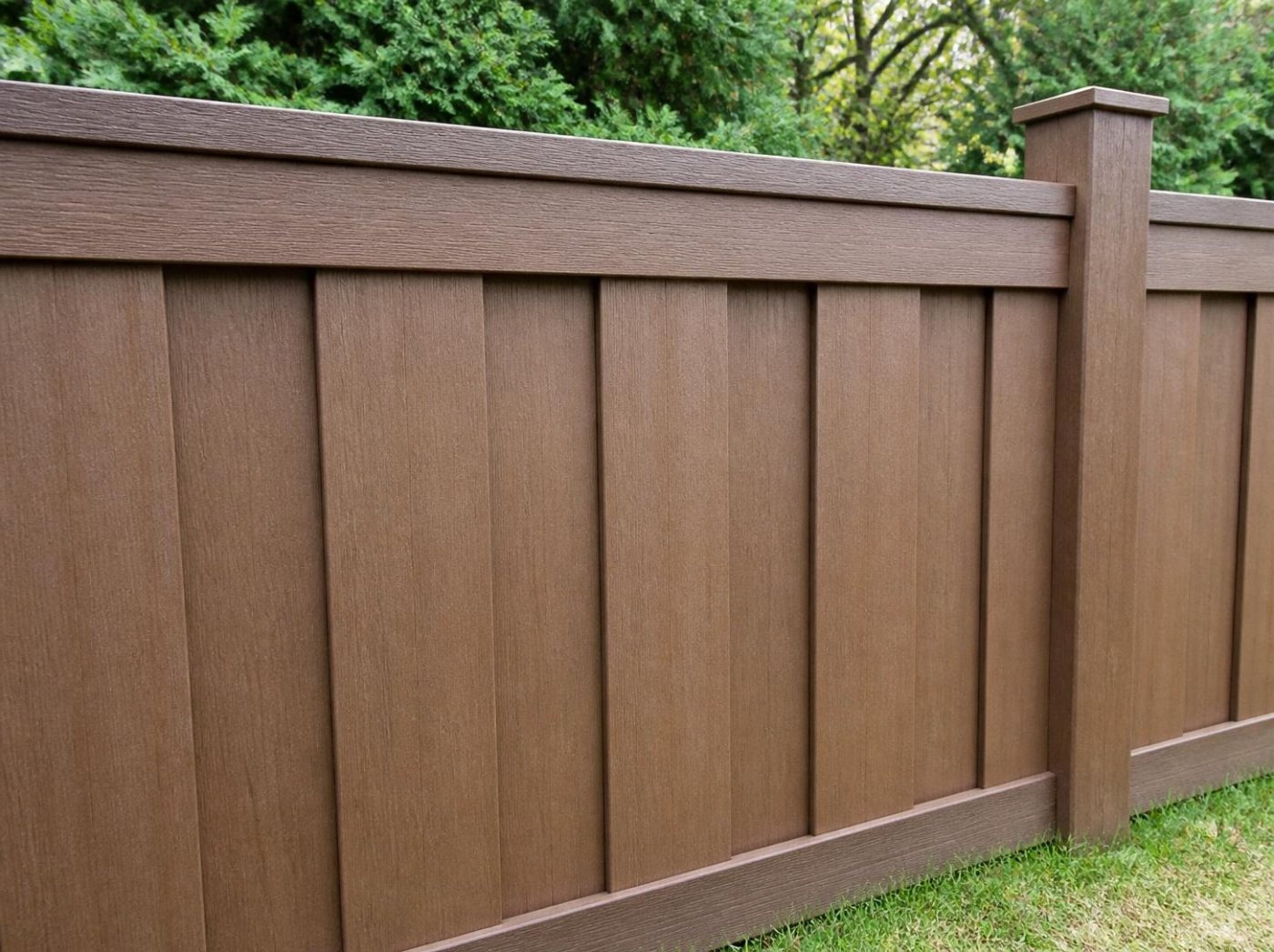
Most backyard fences around Conroe are wood, and for good reasons. It is the material most HOA guidelines were written around, it is the cheaper build, and a broken picket is a ten-minute repair. Composite has been showing up more on newer homes and on lots where a wood fence has already failed once. A question we hear a lot is whether composite is worth what it costs.
The answer depends less on the material than on the lot. A shaded yard under pines and a sunny yard on a brand-new street ask very different things of a fence.
What you are comparing
Wood here usually means cedar pickets or pressure-treated pine on wood or galvanized steel posts. Composite boards blend wood fiber and plastic and are pressed with a grain pattern on the face, so they pass for wood at a glance. Trex is the name most people know. The boards are heavier than wood, so composite fences are typically built on steel posts or an aluminum frame.
| Factor | Wood (cedar or pine) | Composite |
|---|---|---|
| Typical installed price per foot* | $25–$35 pine, $30–$47 cedar | $100–$175+ |
| Staining or sealing | Every few years | Never |
| Rot and termites | The main long-term risk | Not a concern |
| Repairs | Single boards, cheap and quick | Fewer needed, but boards cost more |
| Summer heat | Stays cooler to the touch | Dark colors get hot |
| HOA review | Usually written into the guidelines | Varies; some guidelines don’t mention it |
*Ranges from our pricing guide. Your written quote is the real number.
The up-front gap is real
On those ranges, composite runs several times the price of a wood fence. On a 150-foot backyard run, that is the difference between a few thousand dollars and a five-figure project. If you expect to sell in the next few years, wood is almost always the better use of the money.
Composite starts to make sense when you plan to stay a long time, or when the lot is one that wears out wood fences.
The lots where wood struggles
Heavily wooded lots are hard on wood. In communities like Harper’s Preserve, Artavia, and Graystone Hills, many backyards sit against pine and hardwood greenbelt. Shade keeps the boards from drying after rain, pine straw piles up at the base, and mildew and algae grow on the shaded face. Wood in those spots needs washing and sealing more often, and rot at the bottom arrives sooner.
East-shore lake lots in Willis see the same damp air, often with sprinklers running toward the water. Composite doesn’t rot from moisture, and mildew on its shaded side rinses off.
Full-sun lots on newer streets are a different case. Wood there grays and checks from UV more than it rots. A regular stain schedule handles that well, so the argument for composite is weaker.
Upkeep over the years
Wood needs a wash and a coat of stain or sealer every few years, sooner on runs that face the afternoon sun or catch a sprinkler. Each of those jobs is a recurring cost, paid either to a crew or in your own weekends. Wood also needs the occasional replacement picket or rail.
Composite just needs washing down with a garden hose or soft brush, once or twice a year. Keep a pressure washer well back from the surface. Most boards lighten a little in their first months of sun, then hold their color.
If you already know you won’t keep up with staining, count that in the comparison. An unstained wood fence in a shaded Conroe backyard wears out much faster than a maintained one.
Heat and wind
Dark composite boards get hot in July and August. That matters if kids or dogs lean on the fence, or if it wraps a pool deck. Lighter colors stay cooler.
Wind doesn’t care whether a solid panel is composite or wood; both take the same load. With heavy boards on steel posts, post depth and spacing carry the load, so the build matters as much as the material either way.
Will your HOA approve it?
Many community guidelines around Conroe were written with stained wood in mind. Some don’t mention composite at all, some treat it like wood, and others treat it like vinyl. Before you settle on a color, we read your community’s latest guidelines and add the manufacturer’s product and color details in the submittal. Our HOA fencing page explains how that works.
A middle path. Galvanized steel posts behind cedar pickets remove the most common failure on a wood fence, rot at the ground line, for far less than composite costs. Add a rot board and a regular stain schedule, and a wood fence on a shaded lot holds up much better.
When to call us
If you are torn, we can price both materials on the same fence line so you see the real difference for your lot. Book a free estimate online or call (713) 331-9419. If composite is the pick and the up-front cost is the hurdle, financing through Hearth can spread it out for qualified buyers.
Questions
Quick answers
Can composite boards go on my existing wood posts?
Usually not. Composite boards are heavier, and most systems are designed around their own posts or a metal frame. We typically build composite on steel posts or an aluminum frame.
Does composite get mildew?
Some can grow on a shaded side, but it sits on the surface and washes off with soap and water. It won’t rot the board the way it rots wood.
Can I mix composite and wood on one property?
Yes. Some owners put composite on the run they see from the patio and wood on the long side and back lines. Check that your HOA allows the mix first.
Let's walk your fence line
Call or text us, or book a time online. We'll measure, talk through options, and send a written quote.