
Resources · 4 min read
Fencing a new-construction home in Conroe
Survey pins, easements, the builder fence, and where the fence fits between closing, sod, and sprinklers on a new lot in Conroe or Willis.
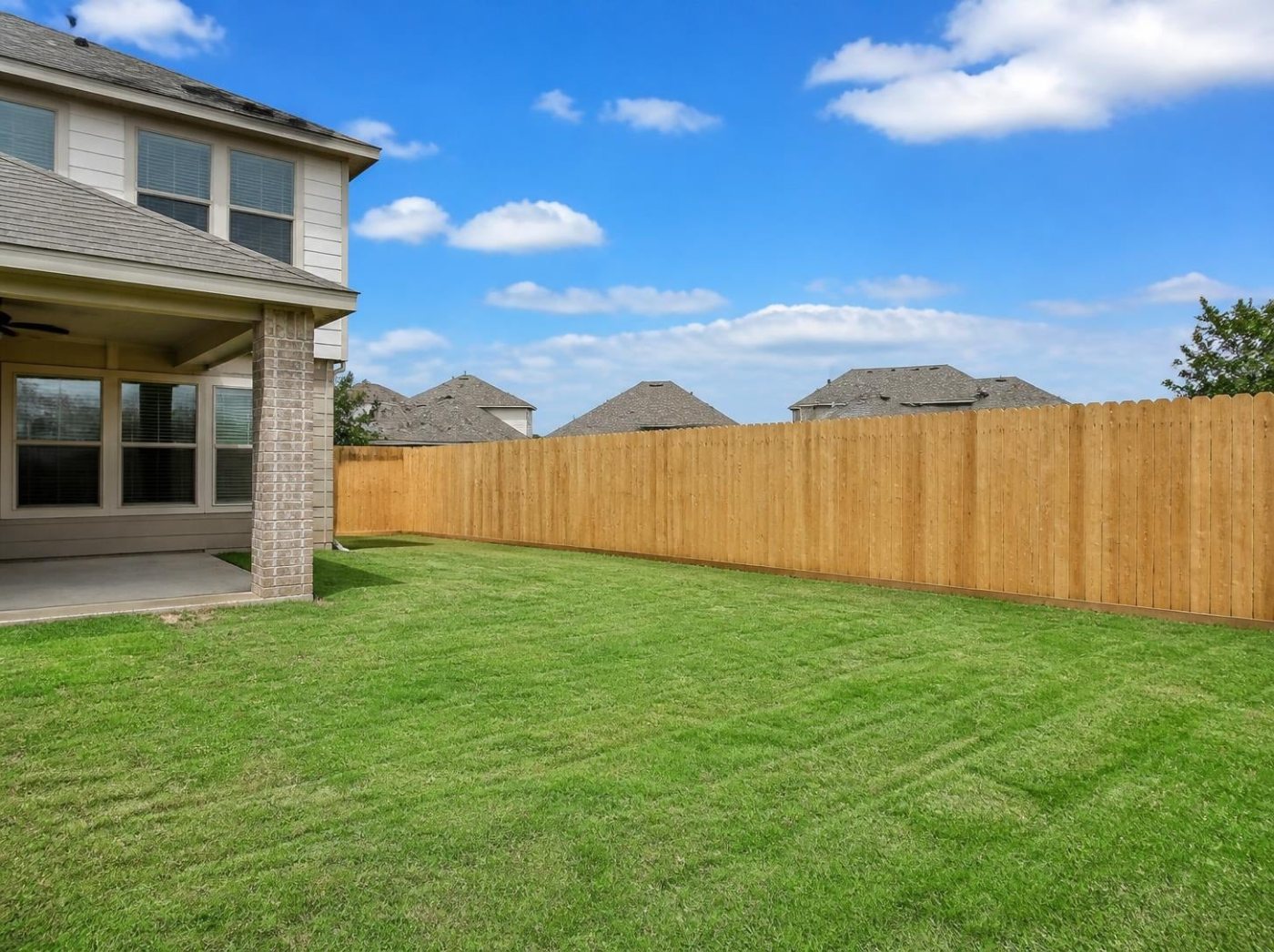
Montgomery County keeps adding homes at a fast clip. The Census Bureau counted 620,443 residents in 2020 and estimated 781,194 by July 2025, an increase of about 26 percent. Much of that shows up south and east of Conroe, in communities like Grand Central Park, Artavia, Mavera, Evergreen, and Cielo, and north toward Willis.
For most new owners, the fence lands near the top of the list. A little planning in the first weeks heads off the two problems we see most on new lots: a fence on the wrong line, and posts that shift as freshly graded ground settles.
Read the plat and find the pins first
Your closing package should include a survey, and the recorded plat for your section shows easements, building lines, and any drainage reserves behind the lots. On a new lot, the iron pins are often the only reliable marker. Sod lines, curbs, and the neighbor's fence may not follow the true boundary yet.
Pins get buried or knocked out during final grading and landscaping. If we can't find them, a surveyor can reset them, which costs far less than moving a finished fence. See our answer on property surveys.
Easements and drainage on a new lot
New sections usually have utility easements along the rear or side lines and drainage swales between houses. Deed restrictions often say what can go in those strips, and a fence built in some easements can be removed if a utility needs access. Inside Willis city limits, for example, the city code allows fences in utility easements but lets city maintenance crews remove them at any time without liability for damage.
Drainage matters more than most people expect. A solid fence with a rot board dropped across a swale can push water back into your yard or the neighbor's. Where a fence crosses a swale, we leave a gap at the bottom or step the panels so water keeps moving. Our flood zone and easement answer goes further.
Builder fence, upgrade, or start fresh
Many new homes come with a builder fence. Some hold up fine. Others are built cheaply, with light posts that don't go very deep, and start leaning within a few years. If your builder offers a fence package, ask what post size, depth, and concrete it includes, and compare it with an independent quote.
| Option | When it makes sense |
|---|---|
| Keep the builder fence | It is straight, the posts are solid, and it does what you need. Plan to stain it once the wood dries. |
| Add to it | You need a wider gate for a trailer, an enclosure for a future pool, or a section on an open side, where the HOA allows. |
| Replace with a heavier fence | Posts are already moving, you want board-on-board or steel posts, or the lot backs to open space where a different style is required. |
| Build new on an open lot | The builder left the back open or fenced only part of it. You pick the material and spec from the start. |
On replacements, tearing out and hauling off the old fence is part of our quote unless you'd rather do it.
Timing around sod, sprinklers, and settling
The order of work on a new lot makes a difference. The sequence that causes the fewest headaches is:
- Get HOA approval for the fence. Our HOA approval guide walks through it.
- Locate the survey pins and mark the line.
- Install the fence before, or alongside, any new irrigation or landscape lighting near the line.
- Add sprinklers, beds, and lighting afterward, with heads aimed away from the boards.
Texas 811 marks public utility lines, but sprinkler pipe, landscape lighting, and a line to a shed are private and go unmarked. On new lots those private lines are often shallow, too. If irrigation is already in, show us where it runs or flag the heads.
Fresh fill and regraded soil also settle through the first rainy stretches. We set posts deeper where the ground is loose or newly filled, and a gate may need a small adjustment in the first months. That is normal, and we return to adjust it free.
Wooded new-build lots
Conroe's newer communities are carved out of pine and hardwood, and lot clearing doesn't always reach the property line. On lots backing to woods, we often find stumps, buried root mats, and clearing debris right where posts belong. We flag it during the estimate, and clearing shows up as a separate item on the quote before any work begins.
Grand Central Park offers a timing example. Its final lots went to builders in early 2026, with the last new homes expected to sell through 2027. Owners closing in the last sections will be fencing next to lots that are still under construction, so locating pins and confirming the line with the neighboring builder matters even more.
Planning a fence for a new home? Send your address and closing survey to (713) 331-9419 by call or text. We will check the plat, the HOA guidelines, and which jurisdiction covers the lot before we quote, and the pricing guide has typical ranges to start a budget.
Questions
Quick answers
How soon after closing can I put up a fence?
As soon as you have HOA approval and the survey pins are located. The approval is usually the longest wait, so start the application right after closing.
Should I wait a year for a new lot to settle?
Usually not. We set posts deeper in loose or filled ground and come back to adjust a gate if it drifts. Waiting mainly makes sense on a lot that is still being graded.
Can I extend my builder fence instead of replacing it?
Often, if its posts are straight and solid. We match the style and height where your HOA requires it, and tell you up front if the old posts are already moving.
Let's walk your fence line
Call or text us, or book a time online. We'll measure, talk through options, and send a written quote.