
Resources · 5 min read
Fall Fence Maintenance for Conroe Yards and Lake Lots
What to check, clean, and fix on your fence between the end of storm season and the first hard cold front.
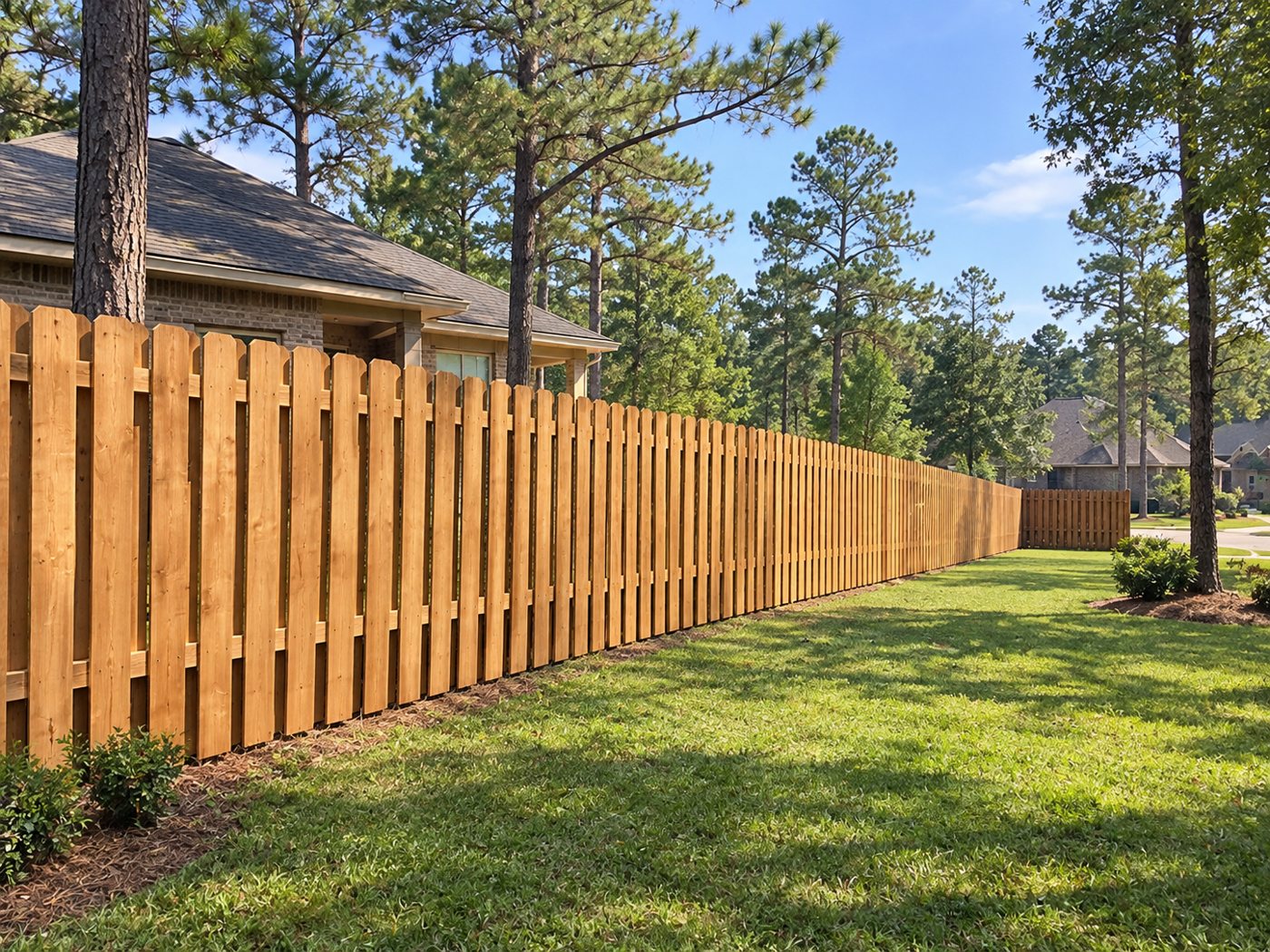
Fall is the season when a fence around Conroe finally gets a break. Most of the summer storms are behind it, the worst heat has passed, and the trees haven’t dropped their winter load yet. It is also when the damage from the past six months is easiest to see, because the yard is drier and the shrubs along the fence line have thinned out.
This checklist is built around the yards we work on most: subdivision lots backing to pine woods, east-shore lake lots in Willis, and acreage up toward Huntsville and Lake Livingston. Most of it is an afternoon with a rake, a hose, and a screwdriver.
Start with the pine straw
In wooded neighborhoods such as Harper’s Preserve, Teaswood, and Graystone Hills, the first fall job is digging the fence out from under the needles. Pine straw and oak leaves drift against the bottom of the boards, hold rain for days, and turn the base of the fence into a damp compost pile. That is where rot starts, and it is the kind of spot termites go looking for.
Rake or blow the litter back a few inches from the boards, on both sides if you can reach the neighbor’s side. Check under the rot board while you are down there. If soil or mulch has built up until it touches the pickets, pull it back. A rot board is cheap to swap; the pickets above it are not.
Walk the line as storm season winds down
Atlantic hurricane season runs through November 30, so late fall is a good time to look over everything the summer storms did. Walk the full run slowly and push on each post at chest height. A post that rocks, or a section that leans while the bays beside it stand straight, is worth flagging now while the ground is dry and easy to work.
- Posts that move when pushed, or that lean the same direction across several bays
- Rails pulled loose from their brackets, or nails backing out
- Pickets split by a falling limb, or boards popped off the rails
- Dead limbs still hanging over the fence from a summer storm
- Gaps under the fence where a dog has been digging or runoff has washed out soil
Leaning posts deserve their own diagnosis, and our guide to fixing a leaning post walks through it. A dead limb over the line is a job for a tree service, not a fence crew, but getting it down before winter wind saves you a repair.
Reset sprinklers before the winter rains
Plenty of lawns stay on a summer watering schedule well into October. Every morning cycle that soaks the same stretch of fence keeps the bottom of those boards wet. Turn the schedule down for the cooler months and turn any head that sprays the fence.
Watch where water goes when it rains, too. Ground here is often a sandy top layer over clay that drains slowly, so a downspout or a low corner that dumps water at the base of a post keeps that post sitting in wet soil all winter. A splash block or a short downspout extension is a cheap fix.
Use the dry weeks to clean and stain
Fall usually brings lower humidity and longer dry stretches than late spring, which makes it a good time to wash and seal wood. Stain needs boards that have dried out after washing and a few dry days afterward to soak in, and October and November often deliver both.
Shaded runs under pines tend to grow mildew and green algae. Full-sun runs on newer lots tend to bleach and gray instead. A wash takes off the growth, and a stain with UV protection and water repellent slows down both problems. If your community has an approved stain color, confirm it before you buy product. Our staining and power washing crew handles the wash, the drying wait, and the color check.
Repair before you stain. Stain will not hold a loose post or a cracked rail in place. Fix the structure first, then refinish, so any new boards get coated along with the rest of the fence.
Gates, latches, and openers
Gates show post movement before the rest of the fence does. Open and close each one. If the latch side drags or the latch no longer lines up, note which way the gate has dropped, because that tells you whether the post or the frame moved. A little lubricant on hinges and latches helps them through the damp winter months.
On acreage and lake homes with an automatic gate, clear pine pollen and leaves off the solar panel, trim anything that has grown up to shade it, and test the manual release so you know how to open the gate in an outage. Backup batteries wear out every few years, and the short days of winter are when a tired battery shows it.
Extra checks for lake lots and acreage
On east-shore lake lots, from Point Aquarius down to Seven Coves, look closely where the fence meets a bulkhead or a slope down to the water. Those ends take wind off the lake and runoff from the yard, and they are often the first posts to loosen. If your fence runs near the shoreline, remember that the San Jacinto River Authority controls the Lake Conroe shoreline up to the 201-foot contour line, so a replacement post near the water takes some planning.
On larger tracts near Huntsville and around Lake Livingston, ride the perimeter and look for trees down across wire, spans sagging between braces, and washouts at creek crossings. Corner and gate brace assemblies carry the tension of the whole line, so a brace that has shifted is worth fixing before it pulls the next one over.
When to call us
If your fall walk turns up a few loose boards, you can probably handle them yourself. If it turns up several leaning posts, a gate that won’t latch however you adjust it, or rot that has reached the rails, text photos to (713) 331-9419 or schedule a free estimate, and we’ll check the whole line, tell you what is worth repairing, and price a replacement next to it when that is the better value. Our repair page lists what we fix, and fall and winter bookings often get on the calendar sooner than spring ones.
Questions
Quick answers
Is it too late to stain my fence in November?
Usually not. What matters is dry wood and a few dry days after the stain goes on, not the month. If a front is bringing rain, we wait. See staining and power washing.
Should I rake pine needles away from the fence or blow them?
Either works. Get them off the base of the boards and out from under the rot board, then move them somewhere they won’t drift back against the wood.
Will you look over a fence you didn't build?
Yes. Book a free estimate and we’ll walk the line, check the posts, rails, boards, and gates, and price whatever is worth fixing.
Let's walk your fence line
Call or text us, or book a time online. We'll measure, talk through options, and send a written quote.