
Resources · 5 min read
Leaning Fence Post? Find the Cause, Then Fix It
Most leaning posts around Conroe trace back to one of four causes. Figure out which one you have, and the right fix usually follows.
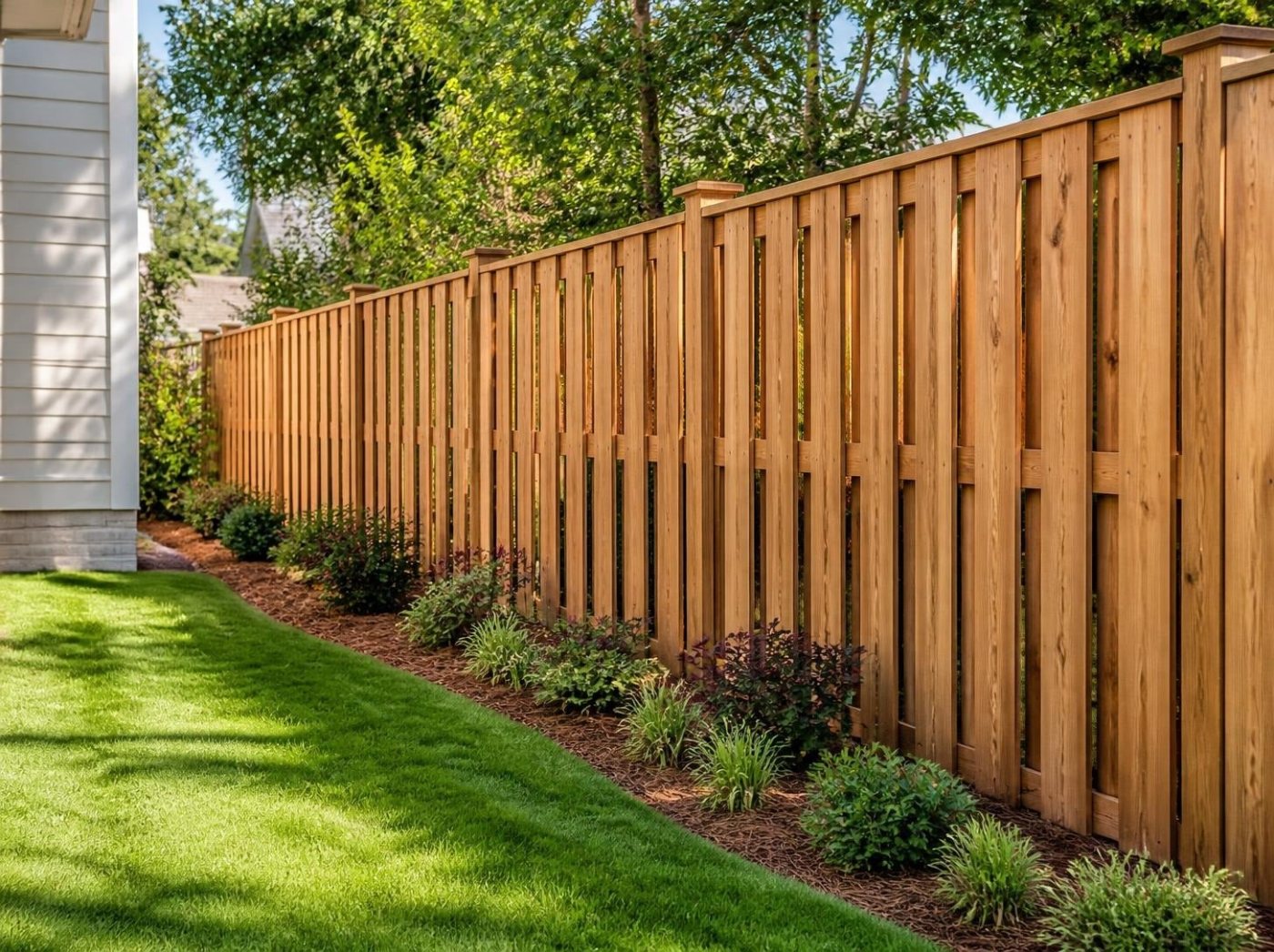
A leaning post is usually the first thing to go wrong with a wood fence around Conroe, and it is rarely just one bad post. The lean is a symptom. The post might be rotted through at the ground, set too shallow when the fence went up, sitting in a hole that holds water, or getting shoved by a tree root. Each cause needs a different fix, and the wrong one buys you a few months at best.
Here is how we sort it out on a job, and what you can check yourself before you call anyone.
Start with a push test
Stand at the post, push it gently at chest height, and watch the base. What moves tells you most of what you need to know.
- The post bends or snaps at the soil line while the footing stays put: rot.
- The post and its concrete rock together, and a gap opens at the ground: the footing is too shallow, or the soil around it has gone soft.
- The post is tight but tilted, and the soil on one side is heaved up: look for a root.
- The post is solid and plumb, but the fence still sags: the problem is the rails or brackets, not the post.
Then count. One leaning post next to a downspout is a local problem. Five posts leaning the same way down a run usually means the whole fence was built the same way and is failing the same way.
Four causes we find on Conroe-area lots
Rot at the ground line
Wood posts rot fastest right at grade, where they stay damp and still get air. Mulch beds, sprinklers, and pine straw piled against the base speed it up. Older fences in neighborhoods like River Plantation and Lake Chateau Woods show a lot of this, and so do shaded runs on wooded lots anywhere.
A shallow set
Builder fences in newer subdivisions are often built to a low price, with thinner posts that don’t go very deep. They can look fine for a few years, then start tipping after a wet season or two. We see it in young master-planned communities as often as in older ones.
Wet sand over clay
Much of Montgomery County has a sandy top layer over clay subsoil that drains slowly. The most common soil in the county, Conroe loamy fine sand, fits that pattern. Rain soaks in fast and then sits on the clay, so a post hole can become a bucket of wet sand after a long rain. A post in loose, wet sand has little to grip, which is why gate and corner posts, the ones carrying the most load, lean first.
Tree roots and slopes
Pines and oaks near a fence line send roots under the footings and slowly push them out of line. On sloped lots, like many of the lake lots at Water Crest, soil on the downhill side of a post can wash away a little with every storm.
Brace, reset, or replace
| What you found | Usual fix | Will it hold? |
|---|---|---|
| Rot at the soil line | Replace the post; consider a galvanized steel post behind the pickets | Yes, if the moisture at the base is also fixed |
| Shallow footing, sound wood | Pull the post, dig deeper, reset plumb in fresh concrete | Yes |
| Loose, wet sand around the footing | Reset deeper and wider, and fix whatever floods the hole | Yes, once the water problem is solved |
| Root pressure | Move the post off the root, or span past it with a longer rail | Usually; cutting a big root is a question for an arborist |
| Many posts failing the same way | Price a section or full replacement next to the repair | Patching a whole failing line rarely lasts |
A 2x4 brace staked into the yard is a fine way to keep a section upright until it is repaired, especially if a dog depends on that fence. It is not a repair. Neither is dumping a bag of concrete on top of the old footing, which mostly adds weight to a post that is already moving.
What you can do yourself
A single mid-run post on an otherwise sound fence is a reasonable weekend project for a handy owner. Free the pickets and rails, dig out the old footing, set the new post plumb in concrete, and let it cure before you reattach anything. Submit a Texas 811 request before you dig a new hole, and flag your own sprinkler lines and landscape lighting, because 811 does not mark private lines.
Leave gate posts, corner posts, shared-line posts, and anything near a bulkhead or a steep slope to a crew. Those posts carry more load, and a mistake there shows up fast as a gate that won’t latch.
How we set a replacement post. We set every replacement post in concrete. On a wood fence that means a hole at least 24″ deep and 80 lb of concrete per post, with a deeper or wider hole where the ground is loose sand or wet. Gate and corner posts get more depth than that. Our guide to setting posts in Conroe soil has the details.
When to call us
If more than a couple of posts are leaning, if the lean is at a gate or a corner, or if the post sits on a shared line with a neighbor, text photos of the post and the whole run to (713) 331-9419, or set up a free estimate. We check the full line, tell you whether the post or the fence is the real problem, and price the repair and a replacement side by side. Our repair and maintenance page lists the rest of what we fix.
Questions
Quick answers
Can I pour more concrete around a leaning post?
Fresh concrete poured on top of an old footing rarely holds. The post needs to come out, the hole needs to be cleaned out or redug, and the post set plumb in new concrete, or replaced.
Will a leaning post fall over on its own?
Usually not right away. But a leaning post pulls on the rails and the posts beside it, and the next strong wind can take the whole section down. Fixing one post costs less than fixing a run.
Do I need to call 811 to replace one post?
If you are digging a new hole, yes. Texas 811 lists building or repairing a fence as a project that needs a locate request, and the request is free. See our Texas 811 page.
Let's walk your fence line
Call or text us, or book a time online. We'll measure, talk through options, and send a written quote.