Resources · 4 min read
Cedar vs. Pine: Which Wood Fence Is Worth It Around Conroe?
Treated pine costs less on day one. Cedar usually lasts longer and stays straighter. Here is how the two compare on Conroe-area lots, and where mixing them makes the most sense.
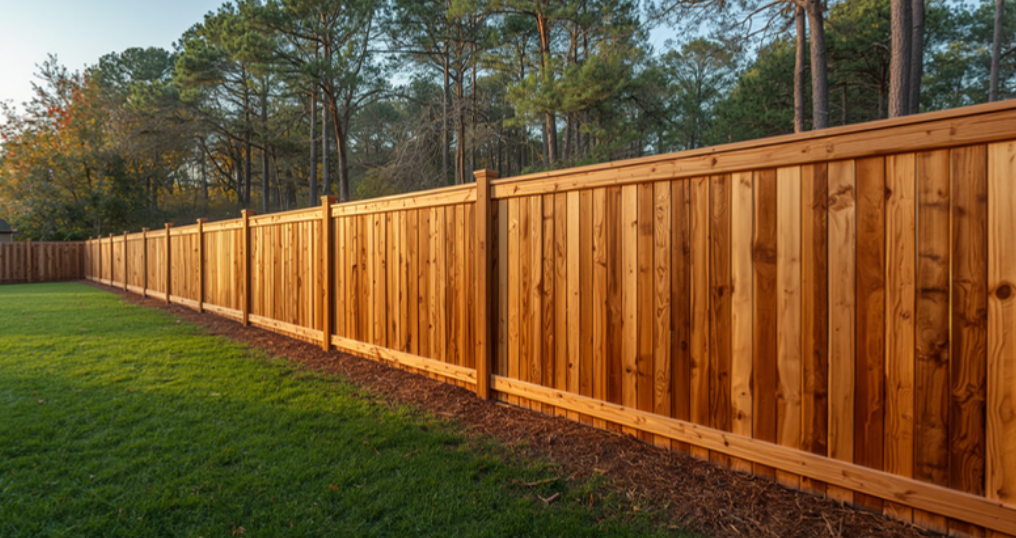
The cedar vs. pine fence question comes up on almost every wood fence estimate we write around Conroe, Willis, and Montgomery. Both are good fencing woods, and both are what most backyards in Montgomery County are built from. They just spend your money differently. Pine is cheaper to put up. Cedar usually costs less per year of service if you plan to stay.
Here is how the two stack up on the things that matter on a Conroe-area lot.
| Factor | Treated pine | Cedar |
|---|---|---|
| Installed price | About $25–$35 per foot | About $30–$47 per foot |
| Typical life here | About 8–12 years | About 12–18 years |
| Rot and bugs | Resists them through chemical treatment | Natural oils in the heartwood |
| Movement as it dries | Shrinks, cups, and twists more | Stays flatter and straighter |
| Look | Pale, plain grain | Warm reddish tone |
| Strength | Heavier and stiffer | Lighter and softer |
Cost: pine wins on the first check
On our pricing guide, a treated pine fence runs roughly $25 to $35 per installed foot and cedar about $30 to $47. On a typical 150- to 200-foot backyard, that gap adds up. Height, style, and post type move the price as much as the wood does, so a board-on-board pine fence can cost more than a simple side-by-side cedar one. We price both species on the same layout so you can see the real difference for your yard.
Lifespan and rot in a humid climate
Around here, water is what wears out a wood fence. Long wet spells, heavy summer storms, and sprinklers keep the bottom of a fence damp, and that is where both woods fail first.
Treated pine gets its rot resistance from a preservative pushed into the wood at the mill. That works well, but the treatment is strongest near the surface, so a deep crack or a fresh cut can expose wood that is less protected. Cedar resists rot and insects on its own through oils in the heartwood. It is not immune, and it still needs to stay off wet ground, but it tends to hold up several years longer on the same lot.
Shaded lots under the pines
On wooded lots in Conroe and Willis, boards dry slowly after rain and pine straw banks against the base. Both woods age faster there. A rot board along the bottom, plus raking the line a couple of times a year, does more for either species than the choice of wood alone.
Warping and gaps as the wood dries
Treated pine arrives wet from the treatment and shrinks as it dries in the Texas heat. Pickets can cup, twist, and open gaps in the first summer. Cedar is a more stable wood, so it stays flatter and keeps a side-by-side fence tighter. If you want a solid look with pine, a board-on-board or shadowbox build covers the gaps that open later.
Posts: where pine usually belongs either way
Cedar is the better picket, but it is a soft, lighter wood. Treated pine rated for ground contact, or galvanized steel, makes the stronger post. That is why many fences we build around Conroe use pine or steel posts and rails with cedar pickets. You get cedar where you see it and a stiffer frame underneath.
The ground matters as much as the wood. Most upland lots in Conroe, Willis, and Montgomery have 18 to 30 inches or more of loose sandy loam over a clay subsoil, and loose sand gives a post little side grip. Gate and corner posts lean first, so we set them in deeper, wider piers belled at the base. Every post goes in concrete, never gravel, with 24 inches and 80 lb of concrete as the floor on wood line posts, and any water in the hole gets pumped or bailed out before we pour. Our guide to setting fence posts in Conroe soil explains why.
Looks and staining
Cedar has a warm color that many owners like as is, and it takes a clear or semi-transparent stain beautifully. Pine is plainer but takes stain evenly, so it is easy to match an HOA color. Either one turns gray within a season or two in our sun if you leave it bare.
Give a new pine fence a few weeks to dry before sealing, since stain won't soak into wet wood. Cedar can usually be sealed a little sooner. After that, both need a wash and a fresh coat every few years. Our fence staining and power washing service handles both woods.
The practical takeaway
- Choose treated pine if budget comes first, you may sell in the next few years, or the fence will be stained a solid color anyway.
- Choose cedar if you plan to stay, want a fence that stays straighter, or like the natural color.
- Consider the mix of cedar pickets on pine or steel posts. For most Conroe backyards, it is the best balance of looks, strength, and cost.
Want to see cedar and pine priced side by side for your yard? Call or text (713) 331-9419, or book a free estimate online. We'll walk the line and quote both on the same layout.
Questions
Quick answers
Can I tell cedar from pine on a fence I already have?
Often, yes. Look at a cut end or a fresh scratch. Cedar is light and reddish brown and smells like cedar. Treated pine is pale yellow to tan, sometimes with a greenish or brown tint from the treatment, and it is noticeably heavier.
Can I add cedar pickets to a fence that has pine pickets now?
On a sound frame, yes, but the two woods weather differently, so a patched section will look different for a while. Washing and staining the whole run is the usual way to blend old and new boards.
Is cedar or pine better if I'm selling the house soon?
A new treated pine fence, stained, looks clean in listing photos and keeps the cost down. If you’re staying for a decade or more, cedar’s longer life tends to justify the higher price. Our fence resale value answer goes deeper.
Let's walk your fence line
Call or text us, or book a time online. We'll measure, talk through options, and send a written quote.