
Resources · 4 min read
Planning a fence on a wooded lot around Conroe
Pines, roots, brush, and shade change how a fence goes in and how long it lasts. Here is what we plan for on wooded Conroe, Willis, and Montgomery lots.
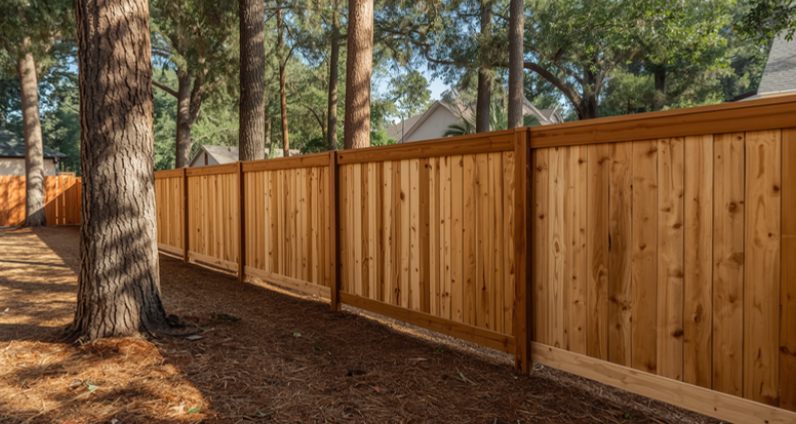
A fence on a wooded lot is one of the most common jobs we price around Conroe, Willis, and Montgomery. Tall pines, oaks, and yaupon thickets are a big part of why people buy out here, and nobody wants to lose them to a fence line. The trees do change the job, though. Roots get in the way of post holes, brush hides the property line, limbs come down in storms, and shade keeps wood damp longer than on an open lot.
Here is how we plan around each of those, so the fence goes in clean and the trees stay healthy.
Start by finding and clearing the line
On an open lot, the fence line is easy to see. On a wooded one, the property pins can sit under years of pine straw and brush. Before anything else, find your survey and, if needed, have the corners located. Our property survey answer covers when that is worth doing.
Next comes clearing. A fence crew needs a working strip along the line to dig, set posts, and hang panels. We note how much brush, vine, and small growth has to come out at the estimate, and the quote spells out what clearing is included.
Working around trees and roots on a wooded lot
We would rather bend the fence than hurt a tree you want to keep. A few rules we follow:
- Keep posts off the trunk flare. The widening base of a trunk sits on its biggest roots. We set posts back from it and let the fence jog around the tree when needed.
- Shift a post before cutting a big root. Moving a hole a few inches along the line usually finds clear ground. Small feeder roots are normal to dig through. Large structural roots are not something we cut without talking to you first.
- Never use a tree as a post. Nailing or screwing rails to a trunk wounds the tree, and the trunk keeps growing and swaying while the fence does not. The attachment pulls loose, and the bark can grow over the hardware.
- Leave room for growth. A gap between the fence and a young tree saves you from a bowed panel in a few years.
Before any digging, we put in a Texas 811 request. Wooded lots often have private lines like well pipe, sprinklers, or a buried feed to a shop, and 811 doesn't mark those, so point them out at the estimate.
Posts in sandy ground under the trees
Most lots around Conroe, Willis, and Montgomery have 18 to 30 inches or more of loose sandy loam over a clay and plinthite subsoil. Loose sand doesn't grip a post sideways, so gate and corner posts are the first to lean. We set those in deeper, wider piers, belled at the base to lock into firmer ground. Every post goes in concrete, never gravel, with 24 inches and 80 lb of concrete as the floor on wood line posts. If a hole fills with water, we pump or bail it out before we pour. Our guide to setting fence posts in Conroe soil goes deeper on the method.
Falling limbs and storm damage
On a pine-heavy lot, a limb on the fence after a storm is a matter of when, not if. You can't prevent it entirely, but you can make it easier to fix:
- Look up before you set the line. Dead limbs over the planned fence are cheaper to remove before the fence goes in than after.
- Build in sections that repair cleanly. A fence with sound posts and standard bays lets us replace one damaged section without touching the rest.
- Consider steel posts. Galvanized posts behind wood pickets won't rot at the ground line, so a limb strike usually means new pickets and rails, not new posts.
Shade, pine straw, and upkeep
Shade keeps a fence damp. On a wooded lot, wood can grow mildew and gray faster than on an open street, and pine straw piles up against the bottom boards and holds moisture there. A rot board along the base keeps pickets out of the straw, and raking the line a couple of times a year helps more than most people expect. Plan on a wash and a fresh coat of stain on a regular schedule; our fence staining and power washing service handles both.
Picking a fence style for a wooded lot
Privacy fences work fine under trees if the layout respects the roots. If you want to keep the woods in view, open styles fit naturally. Split rail suits a wooded front yard or acreage edge, and ornamental aluminum gives a pool or dog a secure boundary without walling off the trees. For larger tracts, wire fencing on wood or pipe posts can follow the tree line without much clearing.
If you are planning a fence on a wooded lot, we will walk the line with you, flag the trees and roots that matter, and put the clearing and post plan in a written quote. Call or text (713) 331-9419, or book a free estimate online.
Questions
Quick answers
Do I need to clear the fence line before you come out?
No. Show us where you want the fence at the estimate, and we will note how much brush and small growth has to come out. The written quote says what clearing is included, so nothing is a surprise on install day.
Will you remove a tree that sits on the fence line?
We route the fence around trees rather than taking them down. If a tree has to go, that is a job for a tree service, and it should happen before the fence goes in so a falling trunk doesn’t land on new work.
Is fall a good time to fence a wooded lot?
It works well. Once the leaves drop, the underbrush thins out, so the line is easier to see and walk. Check the best time to install a fence for how the seasons compare.
Let's walk your fence line
Call or text us, or book a time online. We'll measure, talk through options, and send a written quote.